Cosmetic Dentistry Bakersfield CA for Minor Smile Imperfections
A smile does not need to be dramatically damaged to bother the person wearing it. In practice, the most common cosmetic concerns are often the smallest ones: a chip on a front tooth from a coffee mug, slight spacing that catches in photos, edges that look uneven under bright light, or staining that no whitening toothpaste seems to touch. These issues rarely affect oral health in a serious way, but they can affect confidence every single day.
That is where cosmetic dentistry can be especially useful. Not every patient needs a full smile makeover. In fact, many people in Bakersfield are looking for modest, targeted improvements that keep their smile looking natural. The goal is not to create a uniform, ultra-white look that feels out of place. The goal is to refine what is already there, preserve healthy tooth structure, and make changes that fit the person’s face, age, and expectations.
When people search for Cosmetic Dentistry Bakersfield CA, they are often trying to solve a very specific problem, not overhaul their whole appearance. A good cosmetic plan for minor imperfections should be conservative, realistic, and tailored. Small details matter. So does restraint.
What counts as a minor smile imperfection?
Minor imperfections usually fall into a narrow group of concerns. They are visible enough to be distracting, but limited enough that they can often be corrected with one or two straightforward treatments.
A slightly chipped incisor is a classic example. It may not hurt, and it may not compromise chewing, but it can change the way a smile catches the eye. The same goes for mild discoloration, especially when one tooth is darker than its neighbors. Small spaces between front teeth, subtle shape irregularities, and teeth that appear just a bit short or worn can all make a smile feel less polished than a patient wants.
There is also a category that is harder to measure but very common in the chair: a smile that looks “off” without any one obvious defect. Maybe the front edges are not symmetrical. Maybe old bonding has yellowed. Maybe one lateral incisor is slightly rotated, but not enough to justify braces in the patient’s mind. These are the cases where experience matters, because the treatment plan should solve the concern without creating a new one.
Cosmetic dentistry for these issues works best when the dentist respects proportion. Teeth have subtle individuality. Tiny asymmetries are normal. Trying to make every tooth identical can make a smile look artificial very quickly.
The Bakersfield factor: lifestyle, light, and practicality
Cosmetic preferences are never completely separate from where people live and how they live. Bakersfield patients often want results that look clean and healthy in daily life, not just under ideal office lighting. Strong sunlight, outdoor work, dust exposure, coffee, tea, and red sauces all shape how smiles wear over time. So do habits like nighttime grinding, which is more common than many people realize.
That matters because a treatment that looks perfect on day one but stains easily, chips under pressure, or demands constant maintenance may not be the right answer for someone with an active schedule. For minor imperfections, the best cosmetic work tends to be durable, blend well in natural light, and age gracefully.
It is also common for patients to want improvement without looking like they “had work done.” That usually points toward conservative options such as enamel reshaping, whitening, composite bonding, or limited porcelain restorations rather than a full set of veneers.
Treatments that often work well for small cosmetic concerns
Minor smile flaws can usually be improved with less treatment than patients expect. The trick is matching the problem to the least invasive effective solution.
Teeth whitening for generalized staining
Whitening remains one of the simplest ways to make a smile look fresher. It is especially useful when the issue is broad discoloration from coffee, tea, wine, tobacco, or simple aging. Professional whitening tends to produce more predictable results than over-the-counter kits because the concentration is stronger, the trays fit properly when custom made, and the dentist can assess whether the discoloration is the kind that will actually respond.
Still, whitening has limits. It does not change the color of crowns, veneers, or existing fillings. It also tends to work better on yellow-toned staining than gray or brown discoloration caused by certain medications or trauma. Patients are sometimes surprised by this. If one front tooth is darker because it Cosmetic Dentistry Bakersfield CA had a prior injury, general whitening may brighten the surrounding teeth while leaving the darker tooth behind. In that case, the next step may involve bonding or a veneer on the single tooth rather than more bleaching.
Sensitivity is another practical consideration. For some people it is mild and brief. For others it is strong enough to interrupt treatment. A good dentist usually plans around that, using lower-strength formulas over a longer period or spacing sessions out.
Cosmetic bonding for chips, gaps, and uneven edges
Bonding is often the workhorse of conservative cosmetic dentistry. A tooth-colored resin is shaped directly onto the tooth to repair chips, smooth rough edges, close small spaces, or alter contour. When done well, it can be impressively natural.
For minor imperfections, bonding has several advantages. It often requires little or no drilling. It can usually be completed quickly. It is more affordable than porcelain in many cases. It also allows very targeted changes. If a patient has one chipped corner or one narrow tooth, bonding can solve that isolated issue without touching neighboring teeth.
The trade-off is longevity. Composite resin is strong, but it is not as stain-resistant or wear-resistant as porcelain. Patients who drink coffee throughout the day, clench their teeth, or bite directly into hard foods may need touch-ups over time. In my experience, this does not make bonding a poor option. It simply means it should be chosen with open eyes. For many patients, especially younger adults or people who want to preserve enamel, it is a sensible first step.
A common real-world scenario is a patient who has a tiny chip on a central incisor that only shows from certain angles. A minimal bonding repair can make that tooth disappear back into the smile in under an hour. That is a meaningful result without over-treating the case.
Enamel reshaping for subtle refinement
Sometimes the answer is even simpler. Enamel reshaping, also called contouring, involves polishing or gently reducing tiny areas of enamel to improve the outline of a tooth. It works well when a front tooth edge is slightly too long, a corner looks sharp, or one tooth has a mild irregularity that catches the eye.
This is one of the most overlooked options in cosmetic dentistry because it sounds almost too simple. Yet in carefully selected cases, it can make a smile look more balanced in a matter of minutes. There is no material added, no recovery, and usually no anesthesia.
The caution is obvious: enamel does not grow back. A skilled hand matters. Reshaping should be conservative and planned in context with the whole smile. What looks uneven up close may be perfectly normal at conversation distance. This is why cosmetic judgment matters just as much as technical skill.
Porcelain veneers for a higher-finish result
Veneers are sometimes associated with dramatic celebrity makeovers, but they can also be used selectively and conservatively for minor flaws, particularly when several small issues overlap. A patient may have mild staining, slight shape inconsistency, and a chip or two across the front teeth. In that situation, veneers can solve multiple concerns at once with a very polished result.
That said, veneers should not be the default answer for every small cosmetic problem. They involve more commitment than whitening or bonding. Depending on the case, some enamel adjustment may be necessary. They also cost more and require careful design. For one minor chip, a veneer is often excessive. For several front teeth with old patchy bonding, enamel defects, and uneven proportions, it may be the most stable and aesthetic route.
The key question is not whether veneers are good or bad. It is whether they are proportionate to the problem.
Clear aligners for small spacing or mild crowding
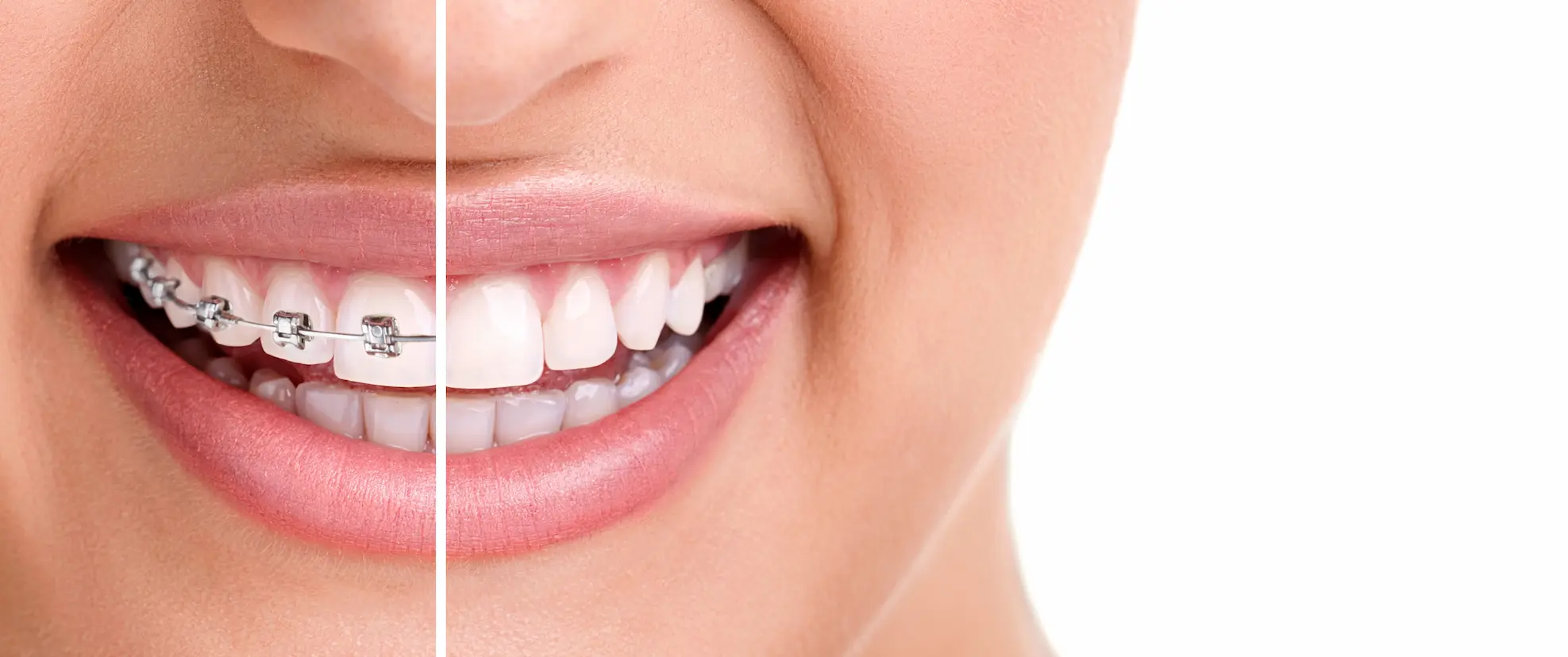
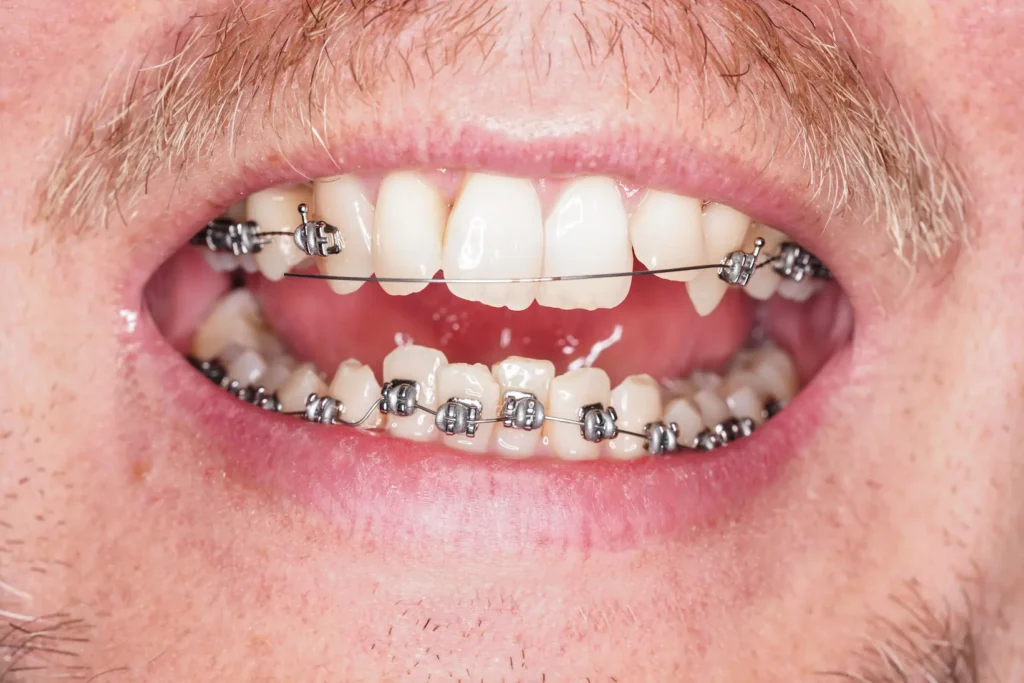
Not every cosmetic issue is about color or shape. Some smiles are healthy and bright but look crowded in one area or have a small gap that has slowly become more noticeable. For these patients, limited orthodontic treatment with clear aligners can be an elegant solution.
Moving teeth takes more time than bonding or whitening, but it preserves natural tooth structure and often improves function along with appearance. Patients who have edge wear from a deep bite or chips caused by teeth colliding in the wrong position may benefit from alignment before any cosmetic finishing. In those cases, straightening first and bonding second tends to produce a more durable result.
This is a good example of why minor cosmetic cases still deserve a thoughtful diagnosis. The visible problem may be a chip, but the underlying cause could be bite-related.
Choosing the least invasive option first
A conservative philosophy serves patients well, especially when the concerns are minor. There is a basic principle many experienced cosmetic dentists follow: start with the treatment that preserves the most natural tooth and still has a strong chance of meeting the patient’s goal.
That often means whitening before veneers, contouring before crowns, and bonding before more aggressive restorations. It also means taking a step back when a patient requests a treatment that is bigger than the problem. A person may come in asking for veneers because they dislike one corner of one tooth. If simple bonding can achieve the same visual outcome, that is usually the better decision.
There are exceptions. Some teeth have old restorations, cracks, or structural weaknesses that make a more durable option appropriate. Some patients are very stain-prone and prefer porcelain because they do not want periodic composite maintenance. Good cosmetic dentistry is not about using the smallest treatment in every situation. It is about using the right amount of treatment.
What a good consultation should cover
Patients often judge a cosmetic consultation by whether they feel heard. That is fair. Minor smile concerns are personal, and many people have spent years noticing the same small flaw in mirrors and photos. But the consultation should do more than validate concerns. It should translate those concerns into a practical plan.
A strong cosmetic consultation usually includes:
- a close look at tooth color, shape, bite, gum display, and existing dental work
- a discussion of what bothers the patient most, especially in photos and conversation
- an honest explanation of what each treatment can and cannot do
- a review of maintenance, cost, and likely longevity
- a plan that starts conservatively when appropriate
The most useful conversations are specific. “I want a better smile” is a starting point. “This one tooth looks darker” or “the edges look jagged in pictures” is something a dentist can design around. Bringing a few photos can help, especially if the concern is more visible from certain angles than in the mirror.
Why shade matching and surface texture matter more than people expect
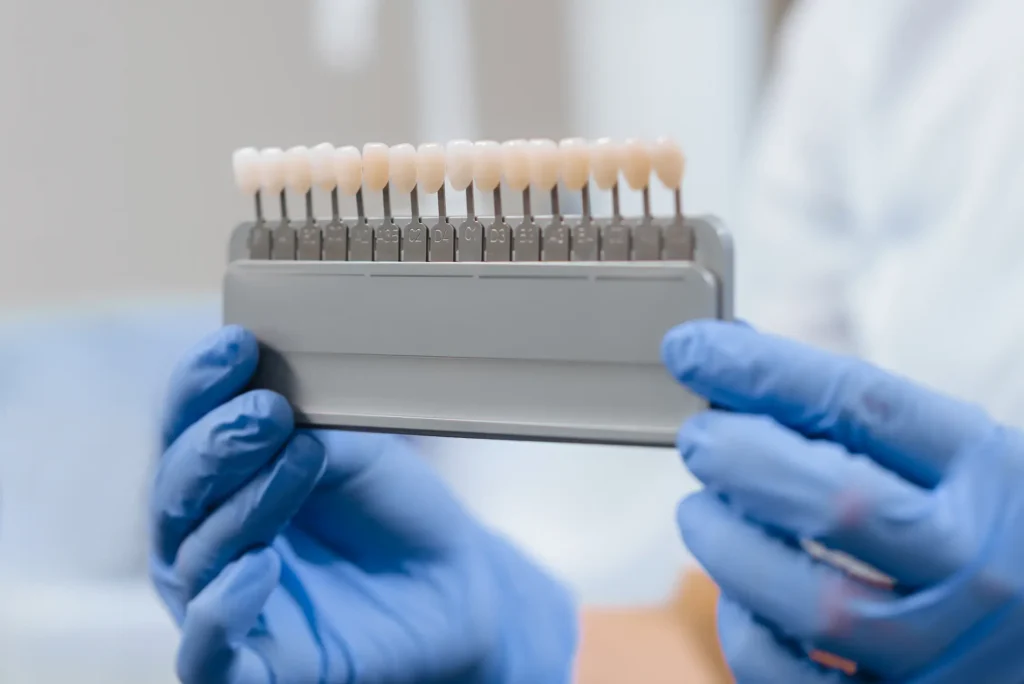
When cosmetic work looks fake, the problem is often not the shape. It is the surface and color. Natural teeth are not flat white. They reflect light differently across the enamel, especially near the edges. They have subtle texture, tiny variations in translucency, and shades that shift slightly from the gumline to the biting edge.
This is particularly important for minor repairs. A single bonded chip on a front tooth has to disappear into a living surface. If it is too opaque, too smooth, or just half a shade off, the eye will find it. The same goes for a single veneer or crown on a visible tooth.
That is why small cosmetic cases can be deceptively demanding. A full set of restorations can be made internally consistent. One isolated repair has to match what nature already built. Patients looking into Cosmetic Dentistry Bakersfield CA should not be shy about asking how shade matching is handled, whether photos are used, and what happens if an aesthetic adjustment is needed after placement.
The role of gum health in a good cosmetic result
Even the most careful bonding or porcelain work will not look its best if the gums are inflamed. Mild bleeding, puffiness, and recession can all change the appearance of the front teeth. A smile may look uneven because the gumline is uneven, not because the teeth themselves are.
Sometimes the smartest cosmetic move is to pause and address the basics first: professional cleaning, better home care, or treatment for grinding that is irritating the tissues. Patients do not always love hearing that the glamorous part needs to wait, but it is the right call. Healthy gums frame the teeth. Without that frame, cosmetic work rarely reaches its full potential.
This is especially relevant for anyone considering whitening. Plaque buildup and gum irritation can make teeth appear duller and can increase sensitivity during treatment. Starting with a clean, healthy foundation produces better results.
How long results usually last
Longevity depends on the material, the bite, oral habits, and maintenance. There is no single number that applies to every patient, but broad patterns are useful.
Whitening may last months to a couple of years depending on diet and touch-up habits. Bonding can look great for years, especially when patients avoid nail biting, ice chewing, and using their front teeth as tools. Porcelain veneers often outlast composite bonding, but they are not indestructible. Clear aligner results need retention, or teeth can drift.
Minor imperfections also have a way of returning if the cause is still active. A patient who chips the same tooth twice may need an occlusal guard. Someone whose teeth keep darkening may need to cut down frequent staining exposure or schedule maintenance whitening. Cosmetic treatment is not just placement day. It is the result plus the habits that protect it.
Costs, value, and the danger of chasing the cheapest fix
Price matters. Patients deserve straightforward information about costs before moving forward. At the same time, the cheapest cosmetic option is not always the best value. A poorly matched bonding job that stains in six months and has to be replaced may cost more in the long run than a carefully planned alternative.
For minor smile imperfections, value usually comes from precision. Conservative treatment that blends beautifully and lasts reasonably well tends to feel worthwhile, even if it is not the lowest quote in town. This is one reason many patients seek out dentists with a strong aesthetic eye rather than shopping by procedure name alone.
It also helps to think in terms of scope. If the concern is one chipped edge, a simple repair may offer excellent value. If there are multiple old fillings, color mismatch, and bite wear across several teeth, the cheapest single procedure may solve only part of the problem and leave the patient dissatisfied.
When minor imperfections are not just cosmetic
There are times when a “small cosmetic issue” is a signal of something functional. Repeated chipping can point to clenching or a bite imbalance. A dark tooth can indicate prior trauma. Edge wear may suggest acid erosion or grinding. Small spaces that develop later in life can reflect tooth movement, gum changes, or habits such as tongue thrusting.
This does not mean every chip is serious. It means cosmetic treatment should begin with a real exam, not a snap decision. If the underlying problem is ignored, the visible fix may fail sooner than expected.
A careful dentist will mention these possibilities without overdramatizing them. That balance matters. Patients need clear information, not scare tactics.
Questions worth asking before you commit
If you are considering treatment for a small cosmetic concern, the right questions can clarify a lot quickly.
- What is the most conservative option that could realistically achieve my goal?
- How will this look in natural light, not just in the operatory?
- What kind of maintenance or touch-ups should I expect?
- If I do nothing now, is the issue likely to stay the same or get worse?
- Are there any bite or gum issues that should be addressed first?
These questions tend to move the conversation away from sales language and toward clinical judgment. That is where good decisions are made.
A natural-looking smile is usually the best cosmetic result
The strongest cosmetic results are often the ones other people cannot identify. Friends may say you look rested, polished, or more confident without knowing exactly why. That is especially true when the original concerns were minor to begin with.
A small chip repaired with precision, a shade brightened just enough to look healthy, a gap softened rather than erased completely, these are subtle changes, but they carry weight. They improve the smile without stripping it of character.
For patients exploring Cosmetic Dentistry Bakersfield CA, that is the standard worth aiming for. Not a generic ideal. Not the most dramatic transformation possible. Just a smile that feels like your own, only more balanced, more refined, and easier to wear every day.
Toothworks of Bakersfield, Dentist and Orthodontist
Address: 1030 H St #1, Bakersfield, CA 93304
Phone number: +16613239421
FAQ About Cosmetic Dentistry Bakersfield CA
What is considered cosmetic dentistry?
Cosmetic dentistry includes any dental treatment focused primarily on improving the appearance of your teeth, gums, or bite rather than treating a disease or restoring basic function.
How much does cosmetic dentistry usually cost?
The cost of cosmetic dentistry typically ranges from a few hundred dollars for minor touch-ups to over $20,000 for a comprehensive smile makeover, depending entirely on the specific procedure, materials used, and how many teeth are treated. Because most cosmetic treatments are elective, they are usually paid out of pocket without insurance coverage.
Is there a difference between a regular dentist and a cosmetic dentist?
Yes, a regular dentist focuses on your overall oral health and preventing disease, while a cosmetic dentist focuses on improving the look of your smile.